

N.B. minerals strategy shows province is ready to ‘compete and win,’ premier says – New Brunswick
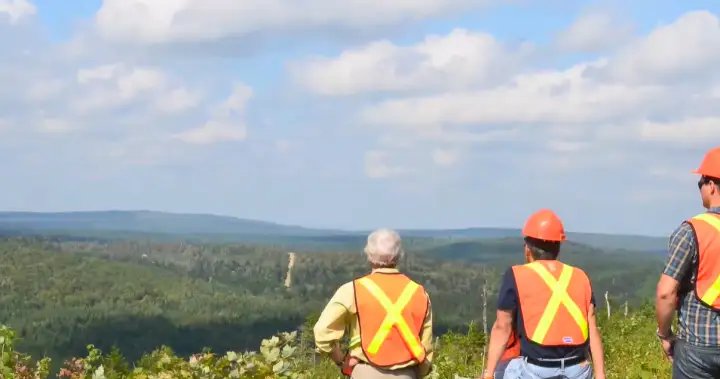
The New Brunswick government has unveiled its minerals strategy, which is aimed at boosting the province’s economy amidst trade tensions with the United States.

The strategy aims to make the province a mining go-to — both nationally and internationally — by streamlining the permitting process. Legislation will be brought in this spring to achieve that.
It also aims to minimize environmental harm, according to the province, and “promote sustainable practices” while liaising with Indigenous communities and creating economic spinoff benefits.
Premier Susan Holt unveiled the strategy Monday at a mining conference in Toronto, saying New Brunswick’s goal is to signal to the world that the province is open for business.
“We’re going to compete and win that investment and we are going to use it to grow our economy so that I can deliver more health-care services and help make life more affordable for New Brunswickers,” she said from Toronto.
“We want to do it in a way that benefits New Brunswickers meaningfully, but that ensures that we still have a sustainable and healthy environment in New Brunswick.”

Get breaking National news
For news impacting Canada and around the world, sign up for breaking news alerts delivered directly to you when they happen.
The new strategy comes as Canada-U.S. trade tensions continue and after Prime Minister Mark Carney added the province’s Sisson Mine proposal to his major project list last fall.
Based on Crown lands near Stanley, N.B., the Sisson project is poised to mine for tungsten and molybdenum.
Both minerals can be used for energy storage and to improve battery performance. As well, since they are lightweight and durable materials, they can also be used in the defence and aerospace industries.
“I’m hoping to see (the strategy) drive up our GDP, increase revenues and economic activity in the province,” said Holt.
“Drive up good wages for New Brunswickers — wages that can help them tackle the rising cost of living because they have a good-paying job working in the mining and engineering sectors.”
However, the Conservation Council of New Brunswick says the strategy is lacking. The group’s executive director, Bev Gingras, said while the strategy is focused on attracting mining companies, it doesn’t clearly state how it will protect the people and environment that’s impacted by mining.


“It doesn’t actually address some of the very important concerns that people have, including environment impacts and social impacts and long-term economic impacts to be able to ensure that social licence can be given,” said Gingras.
She said communities deserve to know the impacts and risks, including potential water contamination, challenges with tailings pond management, traffic, dust, noise, and what happens when the mines are closed.
But Holt pointed out the province and country has “some of the highest environmental standards in the world” and efforts are being made to make careful decisions.
“So some of the first projects that we’re actually driving to development in New Brunswick are former mines. So you’ll see the old Bathurst mining camp used to be one of the largest mining jurisdictions in North America,” she said.
“Now we can use new technology and modern advancements to go back in and look at those old inactive mines and actually bring them back to life to extract more minerals out with technologies we didn’t have before and use a site that has otherwise become a brownfield unusable site and turn it back into something that’s producing jobs for New Brunswickers.”
© 2026 Global News, a division of Corus Entertainment Inc.