4 numbers that explain why the Strait of Hormuz is so crucial in Iran war – National
The conflict is escalating in the Gulf after the U.S. and Islrael’s attack on Iran and Iran’s subsequent retaliation — and observers are warning of oil price hikes across the globe with the effective closure of the Strait of Hormuz, a crucial shipping route.

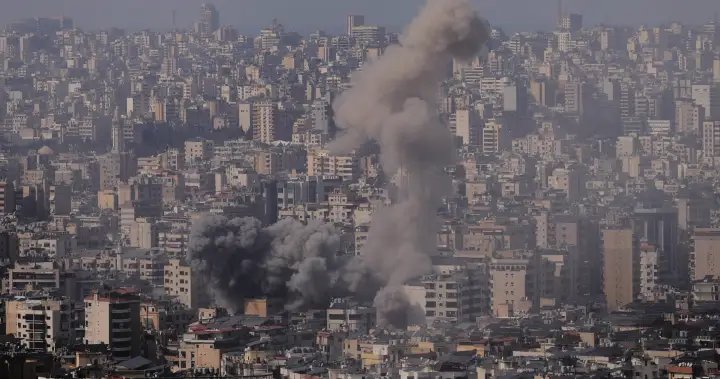
The U.S.-Israeli war with Iran has already halted some energy exports from the Middle East, with Tehran attacking ships and energy facilities, closing navigation in the Gulf and forcing production stoppages from Qatar to Iraq because of damage from Iranian missile strikes on neighbouring countries.
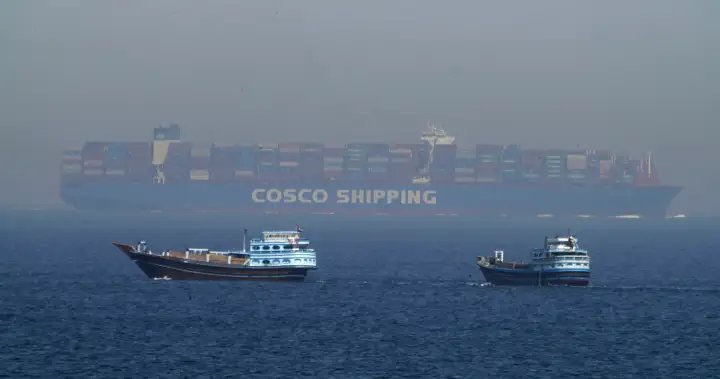
The Strait of Hormuz was impassible for a fourth day after Iran attacked five ships, choking off a key artery with threats to attack any others who try to cross.
The narrow sliver of sea in the Persian Gulf is key for global trade and here are four numbers that can help you make sense of why it’s so important.
March 24, 2021 – Earth Atmosphere – The strategically important shipping route of the Strait of Hormuz is pictured separating the nations of the United Arab Emirates and Iran. It also separates the main water bodies of the Persian Gulf and the Gulf of Oman. (Credit Image: © NASA/ZUMA Wire/ZUMAPRESS.com).
The strait lies between Oman and Iran and links the Persian Gulf north of it with the Gulf of Oman to the south and the Arabian Sea beyond.
At its narrowest point, the Strait is only 29 nautical miles or 54 km wide, according to the International Energy Agency. The shipping lane, however, is only two miles wide or around 3.7 km.
This makes the Strait of Hormuz a ‘chokepoint’ — or a narrow shipping lane along a global trading route.
For the oil-rich nations along the Persian Gulf, this narrow sea passage is the only channel that connects the Gulf to the Arabian Sea.
All along the strait are major shipping hubs, including the major Iranian port city of Bandar Abbas.
On average, a total of 20 million barrels of oil are shipped through the Strait of Hormuz every single day, according to the International Energy Agency. This amounts to nearly a quarter of all seaborne oil trade, the agency says.

Get breaking National news
For news impacting Canada and around the world, sign up for breaking news alerts delivered directly to you when they happen.
Saudi Arabia, Iran, the United Arab Emirates, Kuwait and Iraq export most of their oil through this narrow sliver of sea, with very few alternative routes available.
Most of the oil from the region is exported to Asian markets, primarily to China, India and Japan. China and India account for 44 per cent of all the oil exported from this channel.
An infographic titled ‘Strait of Hormuz,’ created in Ankara, Turkiye, Feb. 28, 2026. (Photo by Bedirhan Demirel/Anadolu via Getty Images).
“With around 25% of the world’s seaborne oil trade transiting the Strait, and options to bypass it being limited, any disruption to flows through the Strait would have huge consequences for world oil markets,” the IEA said in a recent report.
It’s not just oil: global natural gas supply would also be hit if the strait remains closed for a long period of time. According to the IEA, 20 per cent of the world’s total liquified natural gas (LNG) supply comes through this route.
About 93 per cent of Qatar’s and 96 per cent of the UAE’s LNG exports transit through the Strait of Hormuz, the agency said.
“There are no alternative routes to bring these volumes to market,” a recent report said.

Oil trade through the Strait of Hormuz has long been the subject of conflict in the region.
In 1973, Arab producers, led by Saudi Arabia, slapped an oil embargo on Western supporters of Israel in its war with Egypt. Western countries were the main buyers of Middle East crude at the time.


During the 1980-1988 Iran-Iraq War, the two sides sought to disrupt each other’s exports in what was called the Tanker War, which included strikes on more than 100 oil tankers.
In January 2012, Iran threatened to block the strait in retaliation for U.S. and European sanctions. In May 2019, four vessels — including two Saudi oil tankers — were attacked off the UAE coast, outside the Strait of Hormuz.
Three vessels, two in 2023 and one in 2024, were seized by Iran near or in the strait. Some of the seizures followed U.S. seizures of tankers related to Iran.
Last year, Iran considered shutting down the strait after U.S. attacks on its nuclear facilities.

U.S. President Donald Trump said the American and Israeli military campaign in Iran is projected to go on for another “four to five weeks, but we have capability to go far longer than that.”
Since Saturday’s initial attack in Iran, Trump said he has warned Iran “to not make any attempt to rebuild” its nuclear program.
“I said that from the beginning: they’re never going to have a nuclear weapon,” Trump said Monday afternoon at the Medal of Honor ceremony in his first live public remarks since the attack.
The stoppage of trade in the Strait of Hormuz is already hitting global oil and gas supplies.
Iraq has cut oil production by nearly 1.5 million barrels a day and those cuts could widen to more than three million barrels a day within days as the country runs out of storage and cannot export crude due to the Iran crisis, two Iraqi oil officials told Reuters on Tuesday.
Experts are warning that a prolonged conflict would have a major impact on global supply.
“We have (already) seen a stoppage of the flows out of the Strait of Hormuz,” Go Katayama, principal insight analyst at Kpler, told Reuters.
“We’re kind of entering an unprecedented era, much larger in my opinion than what we saw in the Ukraine-Russia crisis,” he added.
The IEA report warned that while much of the supply from the region is sent to Asian markets, the ripple effects will be felt in markets across the world.
An infographic titled ‘Strait of Hormuz,’ created in Ankara, Turkiye, on March 2, 2026. The Strait of Hormuz is known as one of the most strategic maritime chokepoints. (Photo by Mehmet Yaren Bozgun/Anadolu via Getty Images).
“The loss of almost 20% of global LNG supply would fuel price volatility and necessitate further demand adjustments across key Asian and European import markets,” the agency said in its February report.
The effects of the supply shock would be felt well beyond the markets directly relying on Qatari and Emirati LNG,” it added.
— With files from Reuters
© 2026 Global News, a division of Corus Entertainment Inc.